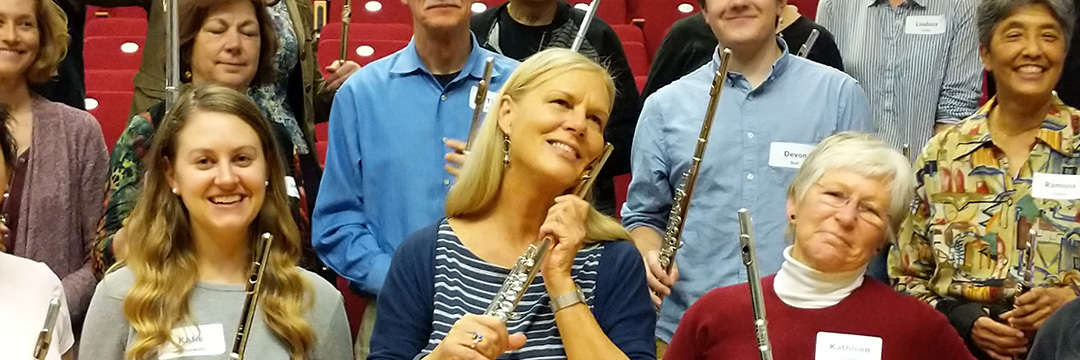
Since coming to Community Music Center, Katrina (Katie) Wreede has been working to create “joyful, student-centered music experiences to develop skills and solid musicianship so anyone can discover their own unique musical voice.”
She finds that working with adult amateur musicians is both challenging and rewarding. Challenging, because as mature music-lovers, they have developed sophisticated assessments of what they most admire in the artists they listen to, and often feel the disappointment that they aren’t up to the task of playing that way. That self-judgement is just baked in, and can get in the way of the joy and fulfillment that chamber music offers us. But this same discernment brings incredible satisfaction when players “find their groove” together, and meet in a realm of mutual musical support; they have a common goal of discovery, exploring the essence of a composition, and they transcend their personal limitations to become something new—together.
How did your relationship with Community Music Center develop, and how did you end up focusing on chamber music?
I started at CMC about 20 years ago with a one-year composer in residence grant. I was embedded with a YMP (Young Musicians Program) ensemble each week, and we collaborated on a piece they performed at the final concert called “A Mini Burrito Kind of Thing.” After the grant was completed, I was asked to stay on as regular YMP faculty and just never left. Over that time, I’ve taken on additional teaching and coordinator roles like Young Musicians Program Coordinator, Chamber Music Coordinator and Director of Camp CMC, all of which bring great satisfaction because of the people I get to work with, and the joy of watching people learn and create something that would never have existed but for them being themselves in that moment.
As a coach working with adult chamber musicians, what concepts are most important for you to share with your students?
My two priorities when coaching adult musicians are to collaborate with them to create a supportive learning situation together and to help each individual improve their technique and listening skills so everyone leaves a coaching session happy to have spent time together and feeling like a better musician than when they arrived. Adult musicians can bring years and years of experience and knowledge to a chamber group or they may have just started lessons as a new hobby and are wanting to try it with other people. It’s important to me that each group is balanced so that people are comfortable making mistakes and feel appropriately challenged in a fun, achievable way. At the end of a quarter, everyone should feel ready to put some music out into the world at one of our recitals, playing alongside their new friends.
As CMC’s Chamber Music Program Coordinator, what have you seen as the reason why students choose to study chamber music at CMC and how does the faculty help them move to the next level with their music?
The CMC Chamber Music Program offers different ensembles for different skill levels and a coaching faculty who have wide experience with diverse instrumentation, chamber repertoire and ability levels. Players come back quarter after quarter because they find satisfaction in the support and guidance they receive from their coach, the friends they make and the variety of times and locations available. The faculty members are all long-time professional chamber musicians themselves, and they know the musical and personal ins-and-outs of making chamber music work.
Speaking of long-time professional chamber musicians, I know you are that! Would you speak to your own experiences playing chamber music, and how that translates into being a mentor?
For me, chamber music is the ultimate way to make music with other people. It can be an intense kind of joyous self-discovery, a wonderful social outlet and a challenge to play your very best because other people are counting on you. This holds true for every level of playing, and I love introducing people to their first chamber experience as well as making space for players who already know what’s what and just want to have a regular place to meet others, get some new ideas and make great music.
Tell us how the program works. As a prospective student, how will I find my group?
It’s a very hands-on process. CMC’s Adult Chamber Music program provides weekly coaching for everyone, from first-time players to highly experienced instrumentalists in trios through sextets, in two locations in San Francisco. Ensembles are formed based on skill level, musical tastes, instrumentation and schedules. I work with every incoming student to get the best placement and match people with their best partners. Several weeks before each quarter, an email goes out to the entire chamber email list (join the list here). It describes the 15 or so ensembles available for the quarter, with times, locations, specific instrument openings, anticipated levels and coach’s name (coach bios are available at www.sfcmc.org). It’s a first-come, first-placed system with a little nudging to get it exactly right. Groups are distributed across the Richmond District Branch and the Mission Branch for each quarter. Piano spots are in high demand, but there are opportunities for 4-hand piano, too.
After looking at these openings, contact me and I will fine tune your placement in order to approve your registration, which you can complete through the CMC registrar at your preferred branch. Coaches and students work together to plan the repertoire for the quarter, and players are encouraged to make suggestions. Each quarter, there are opportunities for a recital performance that’s open to the public. Some players switch ensembles or take a quarter or more off. Some stay together for many quarters to work on more difficult repertoire.
CMC’s adult chamber music program is an excellent way to reconnect with the music you love, enjoy meeting and playing with other passionate musicians or even learn to play with other people for the very first time.



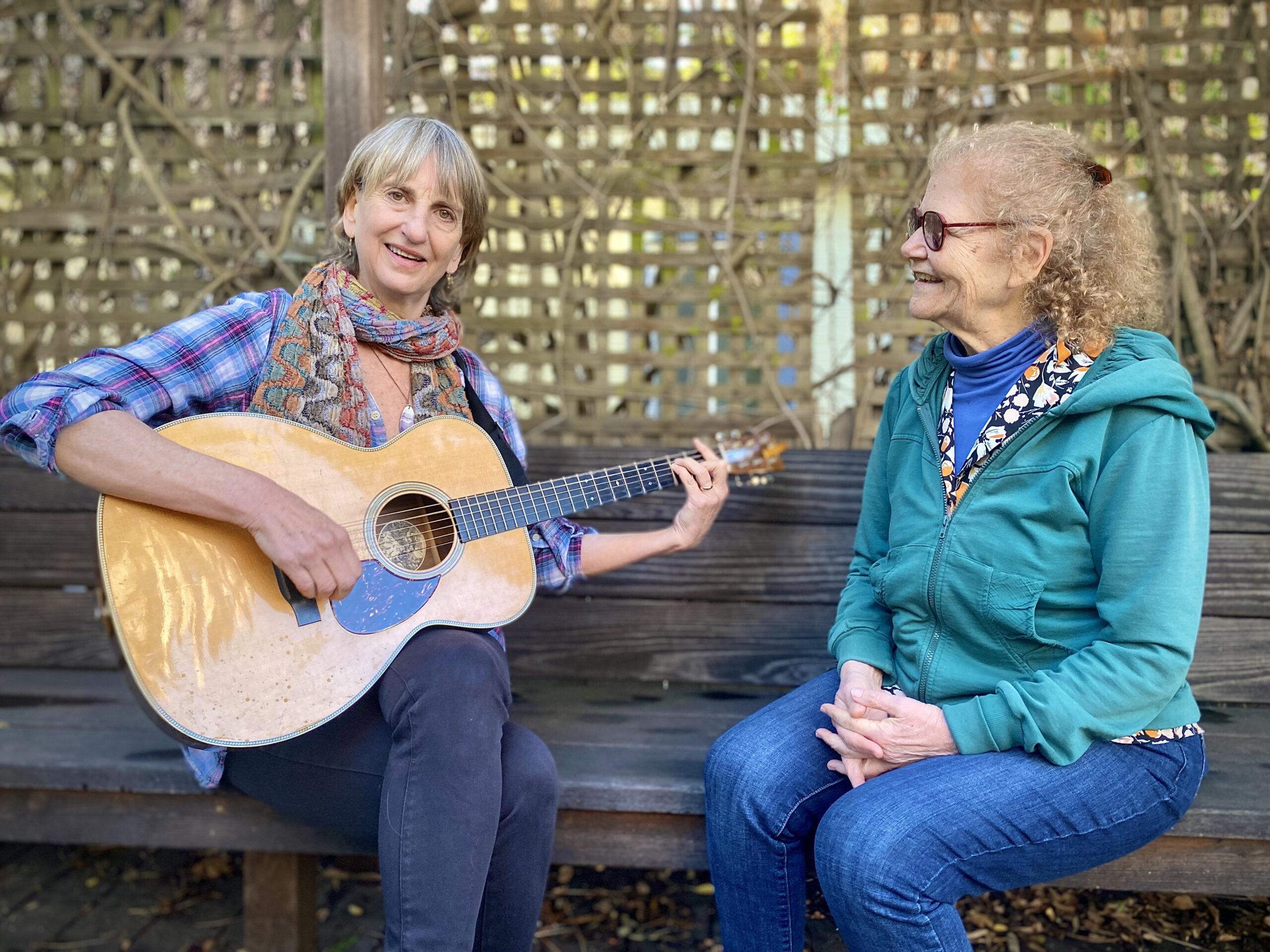 Old friends are the best! AMN’s Lolly Lewis and her long-time pal Cary Sheldon are thrilled to be collaborating on Song Circle, the new online sing-along event premiering Wednesday, March 1, and returning the first Wednesday of April, May, and June.